Understanding the Mechanics of the Incarnation III: An Interview with Larry Chapp

Rabelaisian Catholicism: How has modern science expanded the horizons of theology? What are some books you might recommend about this topic?
Larry Chapp: As for books I can recommend two very highly. The first is Michael Hanby’s No God, No Science? and the second is Conor Cunningham’s Darwin’s Pious Idea. Both are excellent.
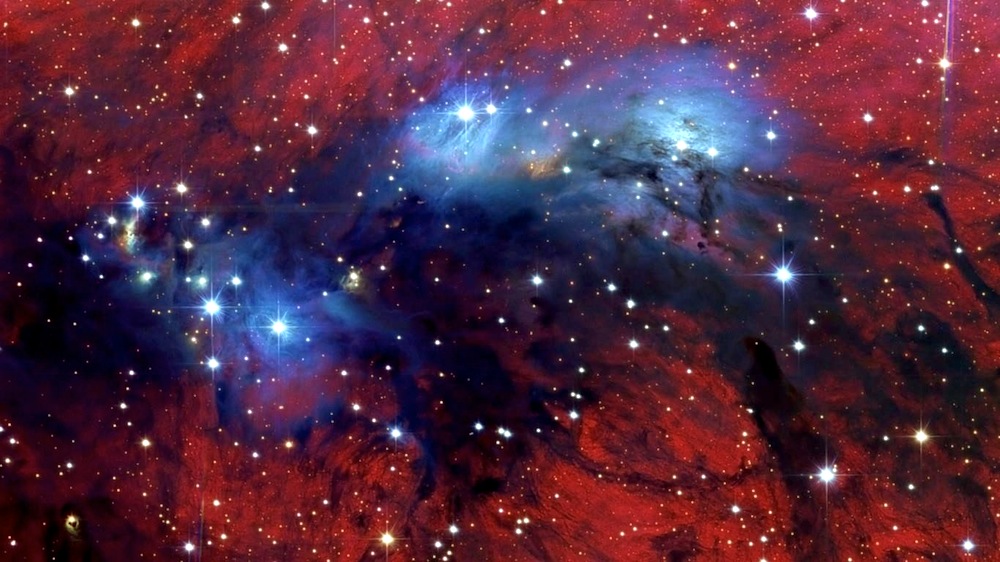
As for how modern science has expanded the horizons of theology I think there are three main areas. First, the discovery of the vast size of the cosmos and its immense age has had a psychological effect on all of theology similar to the effect the discovery of the new world had. It forced theology into a more plural understanding of existence where theology has to come to terms with the soteriological implications of the fact that there are many areas of existence that reside outside of the ambit of the explicit preaching of the Gospel. So just as the vast majority of people on this planet are not Christians, so too if there is alien life out there they too are not Christians. What it does is forces us to rethink what constitutes salvation and the role the Incarnation plays in it. This does not mean that the Incarnation is not central to salvation, but it does mean how it gets applied has to be adjusted.
The second way science has influenced theology is the discovery of the law-like nature of physical interactions. This has led to a re-emphasis of the the distinction between God as primary cause and creatures as secondary causes. The physical cosmos is not divided any longer between the earth “down below” and the rather spiritual cosmos “up above.” All that we see is natural and all that we see is part of a vast and interlocking nexus of natural causes. This does not challenge Christian faith but brings to the fore a truth that had been neglected. Namely, when God created the world he gave it, what the theologian Howard Van Till calls, a “robust formational economy.” In other words, the gift of real existence was a real gift of our OWN existence - - an existence that then operates within the parameters of creaturely causality that participates in but is not reduced to, divine causality. This gives to creation a rightful autonomy from a rigid theonomy that tends toward various theological monisms.
And the third way is related to this. The discovery of evolutionary processes as the chief vehicle within which secondary causes unfolds, gives to existence a dynamic and historical dimension not emphasized enough in the past. The law of existence is the law of growth and development. The theological insight here would be that God gives to creation this formational process of growth in order for creation’s existence to be truly its own so to speak. Imagine, if you will, that God created each one of us as adults with a ready-made set of memories and experiences identical to the ones I have right now. I would be the same person in a sense I am now, but it would not mean the same thing. It would not really be “my life” in an participatory sense, but merely the life God gave me in its totality. But if my memories and experiences truly grew and developed as I grew older, then my life is truly my own in a meaningful way.
I should also add something else of immense importance that goes along with the scientific discovery of the vastness of space and time, as well as the evolutionary nature of existence. One thing this view did destroy was the neat little view of the cosmos as this almost Platonic form of order and teleology, with a neat hierarchy with matter at the bottom and God at the top. It was easy to see cosmic teleology in such a view and it was easy to see all things ordered around their “form”. What science has forced theology to do therefore is to rethink what we mean by cosmic teleology and, indeed, the teleology of our lives as well. Theology has had to adjust what it means by a hierarchy in the world. Cosmic purpose and hierarchical thinking are indeed still possible, but it now has to be much more sophisticated. The atheist physicist Stephen Weinberg once said that the more we know of the universe the more it all seems pointless. But that does rather beg the question doesn’t it? Weinberg needs to lay out what he would accept as teleology before he rejects it. And it is clear that he has some neat, linear purposiveness in view - - a crystal clear direction or pragmatic purpose to it all. But what if the purpose of creation is precisely the maximization of diversity and beauty? The essence of beauty is, as Whitehead noted, ordered novelty. And that is precisely what we find in the evolutionary sequence. Nature does not proceed by pure randomness since all events, even “random” ones emerge in their novelty within the confines of a set of pre-given physical laws that constrain them. Furthermore, there is an excess and a gratuity to beauty. That is precisely its point. Beauty resists reduction to linear forms of pragmatic thinking and enraptures us precisely insofar as it points us beyond such things. So what does cosmic teleology look like if the purpose of it all is the maximization of beauty and diversity? The problem is … we cannot know and that is the point. Such purposes emerge into consciousness only as they reach fruition and even then the excess and gratuity of beauty leaves us with the remainder of mystery. There is a fine line between gratuity and pointlessness and Weinberg is too obtuse to see this.