
Lose Your Passion

Marina Olson
By | June 23, 2014

Throughout Commencement Season 2014, a flurry of articles descended upon us from the print and digital media with advice from celebrities, authors, politicians, religious figures, sports stars, and reporters.

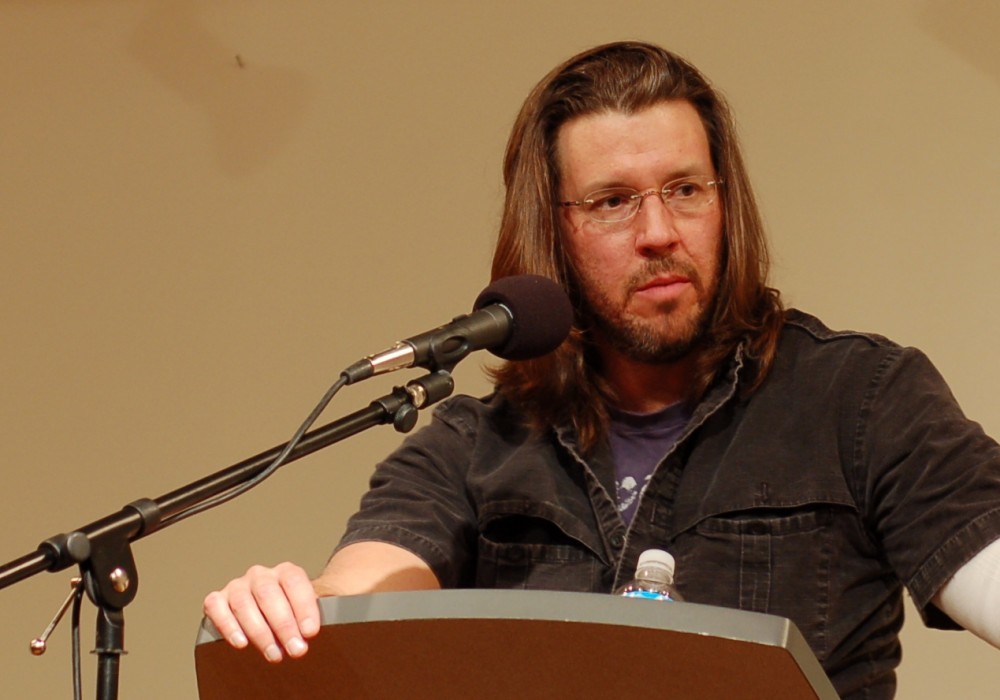
One of the best such articles I read this year was David Brooks’s New York Times piece, “It’s Not About You.” Particularly striking was Brooks’s claim that “[t]oday’s grads enter a cultural climate that preaches the self as the center of a life. But, of course, as they age, they’ll discover that the tasks of a life are at the center.” This observation is not far off from David Foster Wallace’s 2005 “This Is Water” address at Kenyon College:

This is what the real, no bullshit value of your liberal arts education is supposed to be about: how to keep from going through your comfortable, prosperous, respectable adult life dead, unconscious, a slave to your head and to your natural default setting of being uniquely, completely, imperially alone day in and day out. That may sound like hyperbole, or abstract nonsense. Let’s get concrete. The plain fact is that you graduating seniors do not yet have any clue what “day in day out” really means. There happen to be whole, large parts of adult American life that nobody talks about in commencement speeches. One such part involves boredom, routine, and petty frustration.

DFW’s point that most of our life involves boredom, routine, and petty frustration isn’t so far from Brooks’ point that self is not the center of a life, but rather the tasks of this life. Because the fact is, many tasks of life are boring, routine, and minorly frustrating.

For example, making your bed. You wake up and every gosh-darned day it’s a mess again. Every. Single. One. Until you die. I’ve actually weighed the pros and cons of a sleeping bag.

Or if you have kids. As one of my teachers once noted, “children need things. And they have so many needs.” If you are a parent, guess what: Your kids want food. Every. Single. Day. Unless you are into Soylent (please don’t be into Soylent), that means doing things like grocery shopping and cooking, and probably having them not like at least one item because it was cut wrong or tastes wrong or is touching something else.

This is a fairly bleak depiction of the world. A life formed by tasks, many of which are utterly mundane while yet remaining utterly necessary. Hence why the common counter-argument is to “follow your passion.”

Now, I am all about being passionate. I am passionate about my writing, passionate about my faith, passionate about art and music, passionate about this killer piece of pizza I had last night. I find life to be much more exciting when I choose to be passionate about all sorts of things. However, even if some sort of Nietzschean will-to-power was the only requisite for actively engaging your passion, it’s probably safe to bet that some of these passions throughout my life will change, or that I simply will be unable to fulfil them. Or perhaps, horror of horrors, at 24 years old, I am still not entirely sure what my main all-consuming passion is.

Here’s the silly thing about all this “passion” talk: You can have a perfectly grand life without figuring out what yours is. In fact, “finding a passion” is a silly phrase, akin to “finding the one.” Do you walk about with a checklist? Google it? Read the words “stamp collecting” and realize that you have discovered the one real impetus your entire life needed? This isn’t to argue for a bleak and banal existence. In fact, I care deeply about many things. Sometimes so many that it can be disorienting, where I wonder, “What if I choose the wrong one to focus on and miss my passion?” It’s like Are You My Mother? but with Google searches and interior angst.

I think DFW points this out quite clearlyit is exceedingly easy to become mentally enslaved to your whims, desires, emotions, and changing experiences. The goal here is to find freedom to engage the community:

The really important kind of freedom involves attention and awareness and discipline, and being able truly to care about other people and to sacrifice for them over and over in myriad petty, unsexy ways every day.

By growing up and looking beyond ourselves, we face the opportunity to engage the people we encounter in the state-of-life we currently occupy. Being attentive to others, going out of your way to make someone’s life a bit better, even when yours is going horribly awry, may never cause your one true passion to reveal itself to you, fair enough. But these engagements, as we devote ourselves more and more to the particular problems that we can help with, form our “selves.” Not that we are all not-yet-ourselves, but unless you are a saint, you can still be perfected. By rolling up your sleeves and pitching in, you will learn where you are able to help.

If I am not the single most important person in the entire universe, then it’s true that my life isn’t entirely “about me.” It’s about the gifts I have, the ways I can help even if not by means of what I perceive as my greatest gift, and the people whom I am able to help. Saint John Paul II was an exceptionally good actor, from all accounts. But circumstances, like the Nazi occupation of Poland, and Divine Providence, moved him in a different direction. He continued to appreciate the arts, but if his “one true passion” had ever been theater, it was not where life took him. He chose to join the priesthood, and ultimately was chosen to lead the Catholic Church. Which is one of the most roll-up-your-sleeves-and-pitch-in roles with which a person can find himself tasked.

No one is saying life must be drudgery. Life is quite bright and exceptionally shiny. But it tends to look less so when we close our eyes and attempt to impose the world of our imaginations on the exterior. The better way is to realize that there is a world out there that immediately surrounds youyour family, friends, community, country, office, class. There is something you can do to help at least one person in one of those groups.

So don’t worry about whether your life will never be fulfilled because you failed to run off and live with grizzly bears or backpack through Asia, although I’m sure both are fun in their own way, and perhaps that is your immediate situation. But if it isn’t, if you are stuck in suburban nowhere and feeling like your passion may never show up, maybe the problem isn’t your passion. Maybe you need to show up and help where you can. Because the weirdest thing happens: When you make it not about you, you tend to find yourself caring about things. Which, some may argue, is the first step toward finding yourself passionate.

Print Friendly
  • Mattias A Caro

    Interesting thoughts. Do you think it is possible to break “beyond” passion without calling? That is, the chief example you give (JPII) involves a calling or the interposition of a third-person’s call (or design) for JPII’s life (namely…God). Thoughts?

  • Mari

    Mattias, I would say my thoughts on calling are that it gives a particular structure or locus within which the particular gifts, failings, and accidental reality of the individual in their particularity play out. I mean, technically it can also depend how strictly we take the notion of vocation, correct? I know many Trid Rite individuals who have put forth a strong argument that vocation applies to the priesthood only of the states of life. I believe the term can appropriately be used to cover the “states in life” notion. Just to set up my position there.
    I would say that you make a good point- I think considering Divine Providence as directive of circumstantial realities provides a hope that pushes us beyond the notion of passion. Because, suddenly, there can be a vast amount of meaning in the life we lead even if we can’t yet see the depth. God loving us, ultimately, immediately grounds our life in meaning. This is why the Catholic Church is so repulsed by the culture of death- the individual has meaning by their existence, and “to exist is good.” (I know

  • Mari

    Sorry it broke on me. Cntd: I know phenomenology may disagree with existence=good simply, but let’s be Thomists for a second. If existence, and the Divinely Providential direction of our lives (plus our cooperation) is what determines meaning of our lives, not the meaning we impose into it, then I think we transcend the concept of passion as we colloquially employ it. I suspect it’s a similar idea to how Balthasar employed the idea of internal luminosity. The individual has worth.

    Interestingly, I’ve been reading Simone de Beauvoir (not The Second Sex, but another work offering a defense and exposition of existentialism) and have come to realize that there are simply so many postmodern ideas that get tangled up in colloquial speech that derive from either Hegel or Nietzsche. I think that existentialism, which largely encourages us to impose content into being as we see fit, really has a deep hold on modern pop psychology and normative terms.

    What do you think?

  • Benjamin Carpenter

    I really enjoyed your article, Marina. I especially took to the excerpt from DFW. I wanted to come at what he said from a slightly different direction. I have shuffled around varying aspects of Romanticism in my head, aspects which I have observed closely in other people and I feel as if there is a strong connection between the idealism of ‘passion’ and the romantic. There seems to be no ‘day-to-day’ for a romantic, only an idea which exists in the self-centered mind. Having encountered these tendencies in other I have come to the conclusion that the romantic believes in a ‘passion’, I guess, that he cannot accept the day to day monotony and maybe even believes that it doesn’t exist, and he chooses his own suffering. Everything is mental, of course.

    Expanding the second claim, I must say that that is why this type of person cannot figure out his situation at times. He has woe because he cannot accept what he thinks as non-being, the quotidian. This is the first case of suffering in the romantic and it is self-imposed.

    Expanding on the third claim, which is the most blatant and severe symptom, I focus on this persons choosing his own suffering. The romantic in us, especially in men, enjoys the stories about knights throwing themselves in life-threatening situations to save fair maidens and kill a monster, but it is the over-board romantic that wants to do this for its suffering and get a kick out of it. He also wants to be the man who takes the burden off of others or the man who through blood,sweat, and tears works the land in his melancholic vision of the farmer and his work. He wants to suffer not because it is good but because it brings him some kind of recognition. What is even worse is when he realizes that no one will see him be the ‘great sufferer’ but that he, at least will see it. He is constantly creating realities in which he is recognized for his suffering. Ultimately, this is severe narcissism and an almost erotic desire for esteem and greatness. Not honor, but fame, it seems.

    Though seemingly adrift from your original point, I feel as if it is an effect or even a cause of the ideas which DFW insinuated graduates might have. Without actually putting ourselves into the mix and giving a helping hand, the self-pointing self will step wholeheartedly into a picturesque world where suffering makes him awesome, and manly, and recognized. True, suffering makes one awesome (if his disposition is right) but there is a sneaking horrible reality which levels those wishful notions. But that is the redemptive reality wherein one dies to himself. Even with what I just said, one could assume that as a vision of great suffering: “the melancholic and horrible reality which is suffering, oh woe (and great) is me for dealing with the harshness (or boredom) of it.”

    I think what you say is really the cure. In paraphrase, get out and “help where you can.” And if there are narcissistic tendencies, show up more and help out more where you can! Eradicate those notions and take each day as it is, its little sufferings or big ones, and I wouldn’t ask for them. They will come to you as will all good things.

  • Peter Atkinson

    Thank you for this article. It’s helpful in reference to vocation as well, since it seems as if we speak about vocation in the same manner as “finding one’s passion.”

  • Michael the Looplander

    Are you asking if one can break beyond God?

  • Mattias A Caro

    I am asking if confronting and moving beyond passion requires another with authority to call you out of your own passion. In other words, does Marina’s thesis even make sense in a secular context?

  • http://kindlefrenzy.weebly.com DS Thorne

    Marina is right to point out the unique potential for anxiety that we bring upon ourselves when we make passion the center of our lives, or the standard of what life ought to be. It is a sort of individualistic utopianism, which tacitly assumes that life is such to deliver the goods, and also that are passions are necessarily sound-that passion and goodness converge. Also that our passions can be discovered and harmonized with one another.

    At the risk of pedantry I would point out the origin of “passion”, which is the Latin “passio”, to suffer, or to be the recipient of an event. Passion is what happens to you, that over which you have no power. To make passion your guiding star is to surrender the very autonomy which in cultivating makes us grow up.

    I also agree that an undo devotion to passion devalues other things and other people. We can only make one thing our God, and what often counts as passion only partially overlaps with other necessary goods. And many days that good is nothing but another drop in the bucket.

    ~DS Thorne, kindlefrenzy.weebly.com