Reading the Tea Leaves on Francis

The latest craze amongst conservative Catholics seems—ironically—to be tasseography. It’s the technical term for reading tea leaves, which is what much of the recent commentary on Francis, his failures, and the synodal fallout is stacking up to be.
The pope’s closing speech, aiming for a middle way and intending to back down from the doctrinal precipice, as Ross Douthat puts it, is still as noncommittal as ever. Every effort has been made, nonetheless, to ascribe to it some very real agenda; that’s the condition upon which Douthat’s hard-hitting and widely circulating article rests. (Here’s the same writer’s post-script that’s also worth reading.)
We can all admit that Francis stacked the deck; it’s foolish by now to believe otherwise. But so far as I can tell no necessary connection exists between the pope’s (arguably overstated) “pastoral” prerogative and the obliqueness of his final remarks. The notion that a carefully crafted master plan extends unbroken from ad hoc staffing decisions through just-the-right-amount of ambiguity at sign off time, quite frankly, discerns more organizational clarity in Francis than experience could possibly warrant. On a more positive note, we have his latest comments on marriage—”the family is being bastardized,” etc.—that don’t help this case. And then there’s Bergoglio’s historic “war of God” against gay marriage in Argentina.
But if the pope isn’t Machiavelli, who could he be?
A simpler solution might suggest that Francis emerged from the synod keenly aware of the deep rifts between his bishops, and that his closing remarks are an expression of profound grief rather than conniving machinations. After all, division in the synod showed to run much deeper than pro and contra sparring on strategic, pastoral claims; it apparently included even ad hominem-style potshots (à la Kasper) as well as—and indeed far worse—a foundational disagreement among the Church’s noblest pastors about the real nature of her greatest vulnerabilities. Suffice to say that there are now and will forever be innumerably more “average” Catholic families struggling to live the Gospel than there are, or shall be, same-sex couples seeking ecclesial enfranchisement—to say nothing of the hordes of remarried Catholics whose minds are long made up and for whom a “bad Catholic” option will never exist.
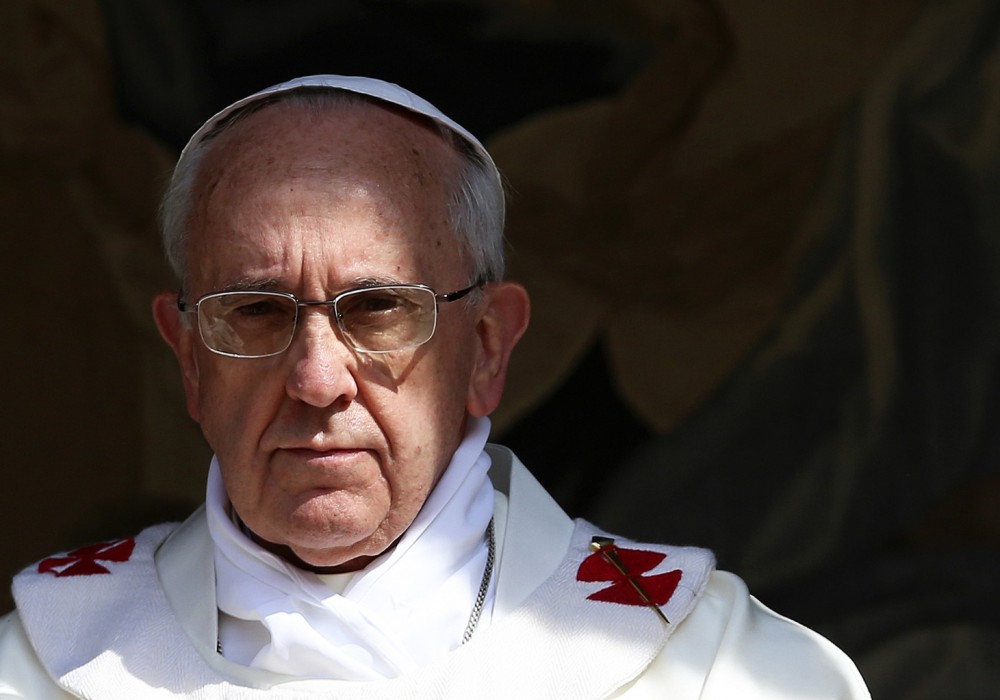
In short, the synod shed light on a slew of genuinely unsettling facts; yet it’s hard to believe they could have escaped the silent, serious gaze of Pope Francis—even if at an earlier moment that gaze was more playful and antagonistic.
Let’s all agree that the synod was a disaster. Sure. But let’s also be honest that the readings on Francis are starting to stink a bit of groupthink, and are beginning again to project the same corporatist impulses that drove the Church and many of her pastors toward a much steeper precipice in the first place.